FAQ
Q: What should I be most careful about when using it?
Q: What should I be most careful about when using it?
A: In the case of a digital mirrorless camera, the invisible microscopic dust on the surface of the CMOS image sensor must be carefully removed using a rubber air blower. At this time, be careful not to scratch the image pickup object. Microscopic dust that was not noticed when taking pictures with the lens becomes noticeable when using this product.
Q: Is it compatible with any mirrorless digital camera?
Q: Is it compatible with any mirrorless digital camera?
A: Basically, that's right. The back focus is 29.1 mm, the flange back is 27.8 mm, and the image circle is compliant with Fuji Film's G mount, which is the largest in the industry. Therefore, it is compatible with almost all CMOS sizes such as 1 inch, Micro Four Thirds, APS-C from various companies, and full size. (The angle of view is different for each.)
However, since this product uses Leica M mount, a mount adapter made by another company (sold separately) is required to connect it to a non-M mount camera.
Q: It seems there is no warranty card? (Repairs, etc.)
Q: It seems there is no warranty card? (Repairs, etc.)
A: We accept orders for this product directly from customers via the Internet, so there is no need for customer registration. When making repairs. Please send the product to us for repair, we will repair it and then return it to you. Estimated delivery time is two weeks. Free repairs will be made within one year of your purchase (separate shipping fee will be paid on delivery), and repairs after one year will be charged (3,000 yen + shipping fee). We will send you an invoice via email, so please pay using the appropriate method. After confirming your payment, we will begin the repair.
In any of the above cases, the customer is responsible for paying the shipping costs to us. Please note that we ask that you do not disassemble the product yourself.
Q: How is the weather resistance?
Q: How is the weather resistance?
A: It can be used in the temperature range from 0°C to 40°C. Please refrain from using it beyond this range.
Also, it is not designed to be waterproof, so please avoid using it underwater or in rainy weather.
Q: Can this product be used with a film camera?
Q: Can this product be used with a film camera?
A: It can be attached to a Leica M mount camera and you can take pictures. The models we have confirmed are Leica M2, M3, M4-P, CL, Minolta CLE, and Konica RF. In addition, if the camera finder has a 28mm frame, the 28mm frame will be displayed when this product is attached.
-Cannot be used with screw-mount rangefinder cameras.
- Can be used with film SLR cameras if there is an M mount adapter. Ta
However, in this case, the flange back of the camera becomes longer, so the angle of view becomes narrower.
Q: Why is the dial that rotates the turret designed to rotate once and then move on?
Q: Why is the dial that rotates the turret designed to rotate once and then move on?
A: This is to ensure that each optical element installed on the turret is correctly fixed on the optical axis during use and does not move easily. We have adopted a special mechanism for watches called the Geneva mechanism.
Q: What are the characteristics of images taken with a pinhole?
Q: What are the characteristics of images taken with a pinhole?
A: Pinhole photography, which uses the perpendicularity of light, has no concept of focus. In other words, no image is formed. This is what makes it different from lenses, which use refraction, or zone plates, which use diffraction. Therefore, there is no need to adjust the focus.
The features of the images obtained are:
Rather than capturing the details of the subject, this is more suited to expressing the atmosphere of the scene and the feeling that comes from the entire screen. If I had to compare it to something, it would be like an impressionist painting.
- You can get a consistent "bokeh" effect whether you're shooting at long or short distances.
- A large halo (flare) effect is expected when the sun is positioned around the screen.
・Because of the bokeh effect, no image processing is required to prevent portrait rights infringement unless the face is photographed in close-up.
Q: Zone plate. Please tell me the features of images taken with Photon Sheave.
Q: Zone plate. Please tell me the features of images taken with Photon Sheave.
A: Zone plate photography, which uses diffraction, differs from pinhole photography in that it has the concept of focus and forms an image. However, in general photography, chromatic aberration occurs at each wavelength across the entire visible light range, so the resulting image is a collection of these aberrations, resulting in a softer work. However, if you look closely, you will see that the images are taken at a higher resolution than the pinpole.
Q: Is there a way to reduce the effects of chromatic aberration on zone plate images?
Q: Is there a way to reduce the effects of chromatic aberration on zone plate images?
A: The "smart sharp filter" and "haze removal" filter installed in Adobe's image processing software Photoshop seem to have a certain effect.
Q: It doesn't seem to have a focus ring, so how do you adjust the focus?
Q: It doesn't seem to have a focus ring, so how do you adjust the focus?
A: A pinhole theoretically does not form an image, so there is no need to focus. Optical elements that utilize diffraction, such as zone plates, should theoretically be focused, but we have received opinions from authorities that this is not necessary for practical use with this product.
Q: Why do you insist on making products in Japan?
Q: Why do you insist on making products in Japan?
A: First of all, I wanted to bring back to Japan the work that had been transferred overseas to Japanese engineers and manufacturing companies. Thirty years ago, when the hollowing out of industry began, labor costs in neighboring countries were 1/20 of Japan's, but now they are approaching 1/2. Considering the cost and time involved in conversations through an interpreter, local business trips, and trade, I believe that domestic production is superior in terms of convenience of communication, economy, delivery time, and peace of mind.
Q: What is the material of the main body?
Q: What is the material of the main body?
A: It is ABS resin.
Q: How do I use the included transparent bag with zipper?
Q: How do I use the included transparent bag with zipper?
A: To avoid scratches and dirt, please use this bag when not in use. Although you can use the cloth bag that comes with the product, a transparent bag is more effective because you can check the contents from outside the bag.
ZNONZ series
-

ZNONZⅡ 50-6Lt
- Regular price
- ¥34,800
- Unit price
- per
-

ZNONZⅡ 20-6L
- Regular price
- ¥22,800
- Unit price
- per
-
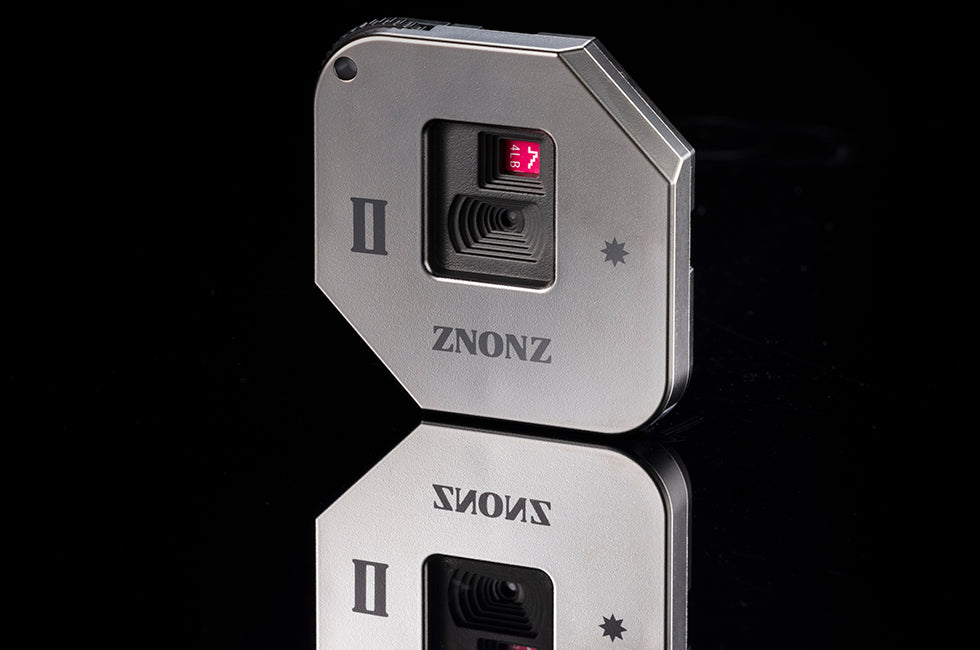
ZNONZⅡ (steel)
- Regular price
- ¥44,800
- Unit price
- per
-
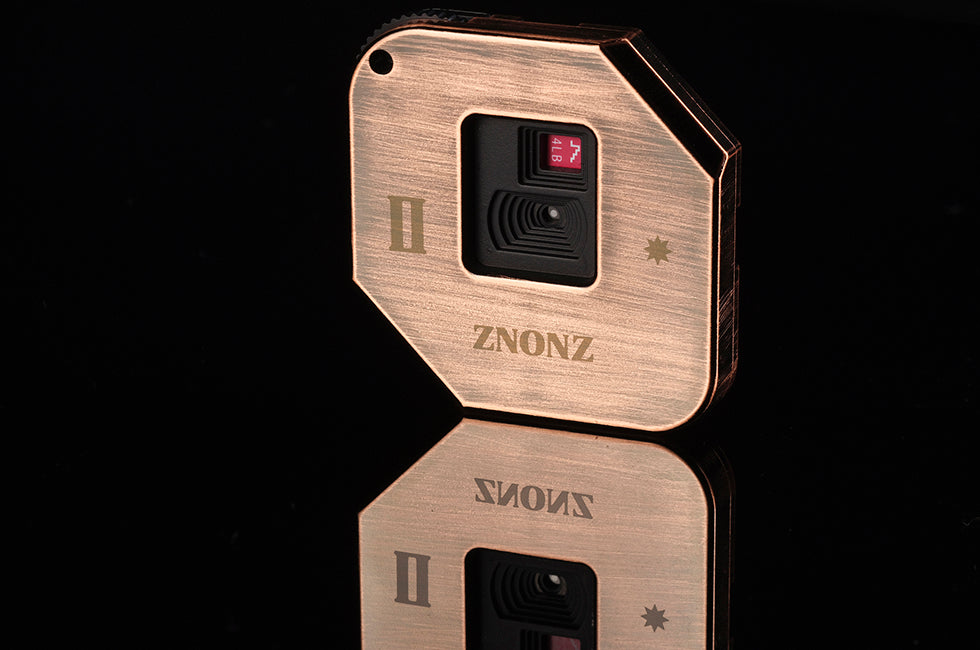
ZNONZⅡ (Bronze)
- Regular price
- ¥47,800
- Unit price
- per
-
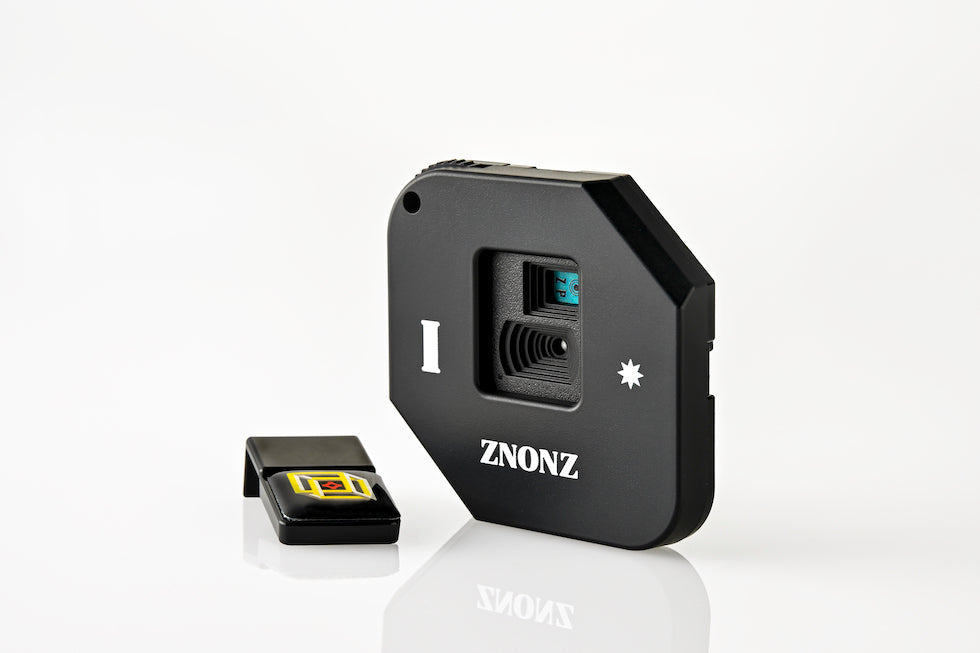
ZNONZⅠ
- Regular price
- ¥12,800
- Unit price
- per


